Home / Is my home suitable?
Will one work in your house?
Probably more often than you’ve been told, though not always without some work first. Here’s how York’s housing tends to shape up, and a quick check you can do yourself.
A two-minute self-check
None of these are deal-breakers on their own. The more you can tick, the more straightforward the job is likely to be.
It’s a rough guide, not a survey. Nothing you tick here is sent anywhere.
How York’s housing tends to shape up
General patterns from the city’s housing. Your own survey always wins over these.
Victorian and Edwardian terraces
South Bank, Leeman Road, the Groves, Clifton. Solid brick walls lose heat faster, and space outside can be tight. Very doable, but expect a few bigger radiators and some thought about where the unit sits in a yard.
1930s semis
Acomb, Dringhouses, Tang Hall, Heworth. Usually cavity walls, often already filled, with room down the side for a unit and an airing cupboard upstairs. Typically some of the most straightforward installs in the city.
Post-war and later estates
Huntington, Haxby, Strensall, Woodthorpe. Better insulated as a rule and frequently on combis, so the main question is where a cylinder goes.
Farmhouses and village homes
Out towards Elvington, Wheldrake, Sheriff Hutton and Flaxton. Often bigger and older, sometimes on oil or LPG. The higher grant helps; careful sizing matters more than anywhere.
Listed buildings and conservation areas
York has a lot of both, so it comes up often.
Most homes in England can have an air source heat pump without planning permission under permitted development rules. Those rules don’t cover listed buildings, which need listed building consent, and conservation areas carry extra limits on where an outdoor unit can sit, especially on walls facing a road.
A good chunk of York, inside the walls and well beyond, falls into one or the other. We check what applies to your address before anything is ordered and tell you straight if an application is needed. A rear yard or a garden wall often solves it.
Near the Ouse or the Foss
York knows about flooding better than most places.
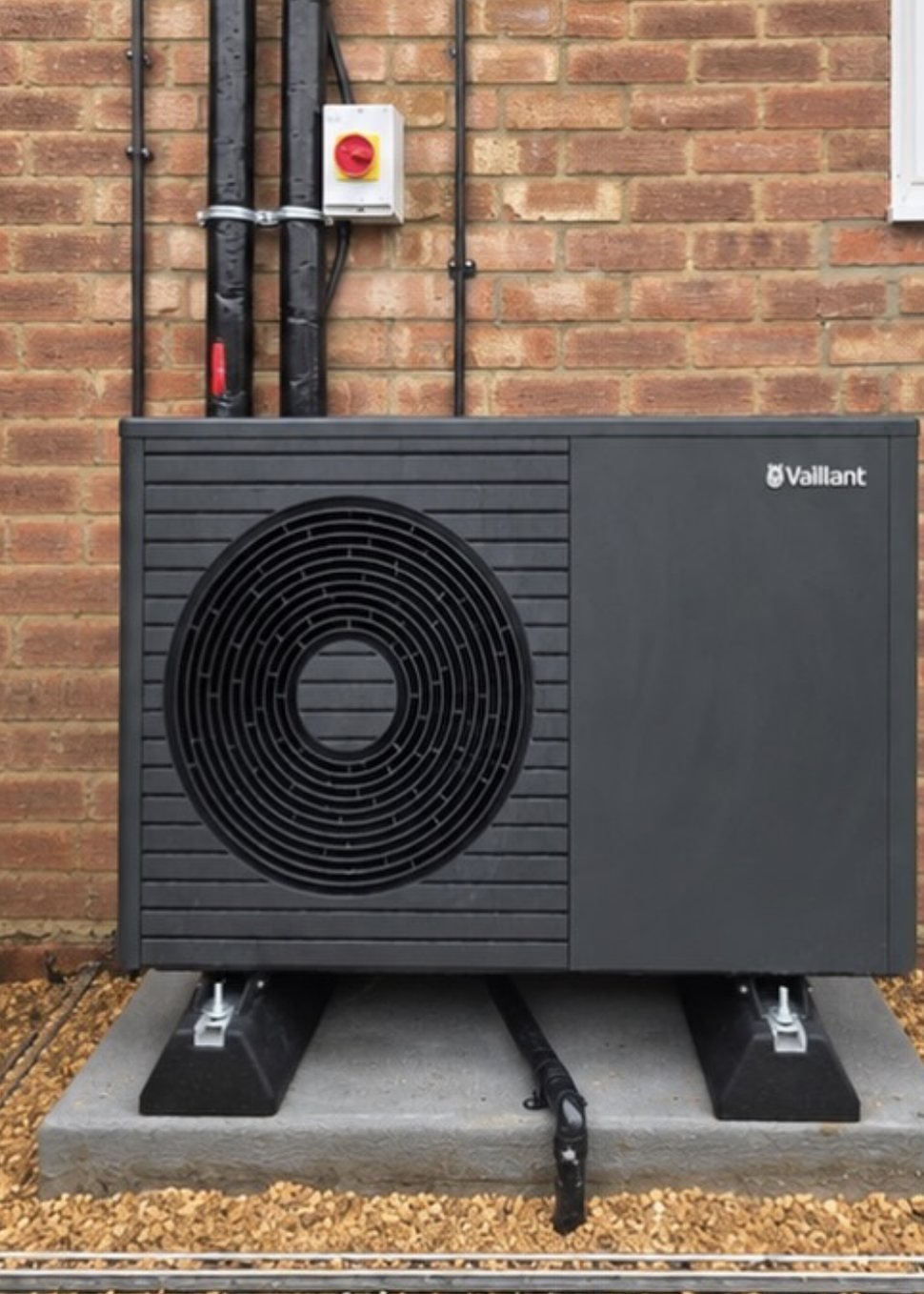
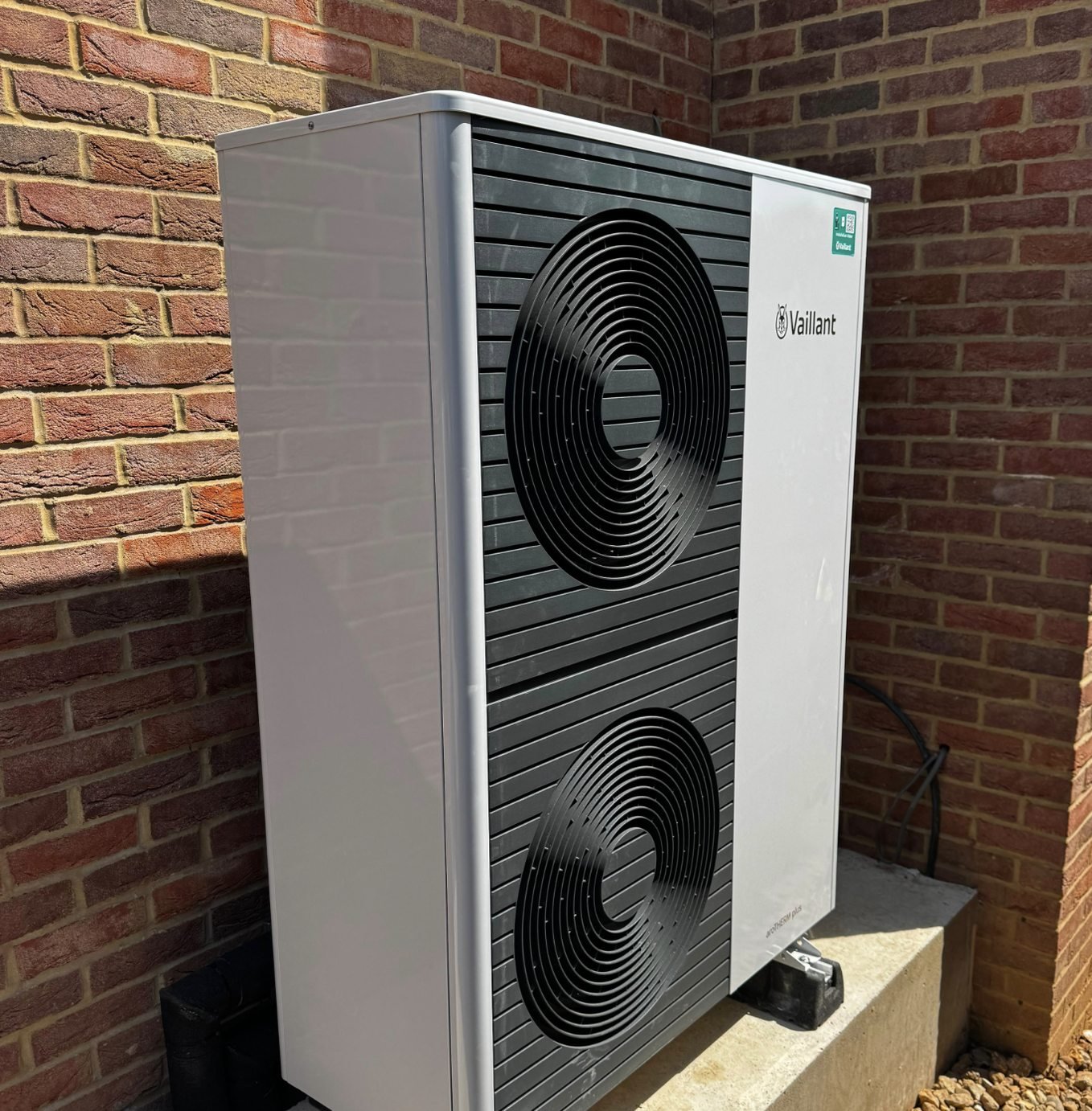
If you’re on a street that has flooded before, the outdoor unit shouldn’t sit at ground level. We raise it on a plinth or bracket, or choose a higher spot on the property, and keep the electrics above the line too. It’s a small extra at install time that saves a whole system later.
Suitability questions
Do I need to insulate before getting a heat pump?
Not always. Loft insulation and draught-proofing are cheap and usually worth doing anyway. Bigger jobs like wall insulation are a trade-off against a larger heat pump and radiators, and the survey shows you both routes so you can decide.
Will my electrics cope?
Most houses are fine. The installer checks the supply at survey and notifies the network operator, which is a standard part of the job. Occasionally the operator needs to upgrade the main fuse; we’ll tell you early if that looks likely.
I’m near the river. Does that change anything?
It changes where the unit goes. On streets near the Ouse and the Foss we look at raising it on a plinth or siting it on higher ground, so a flood doesn’t take out your heating along with everything else.
Can a flat have one?
Sometimes, but it’s harder: there needs to be somewhere for the outdoor unit and permission from the freeholder. Ground floor flats with a garden are the likeliest. Ring and describe it.
Still not sure about your house?
Describe it on the phone. We’ll tell you honestly whether a survey is worth booking.